 RIVET
RIVETBuild your rack.
Choose a device. Shape a sound. Keep your instruments and effects together in one modular workspace.
A native Linux music workstation
A modular studio, built from the foundation up. Instruments in a rack. Signals you can follow. A native home for making music.
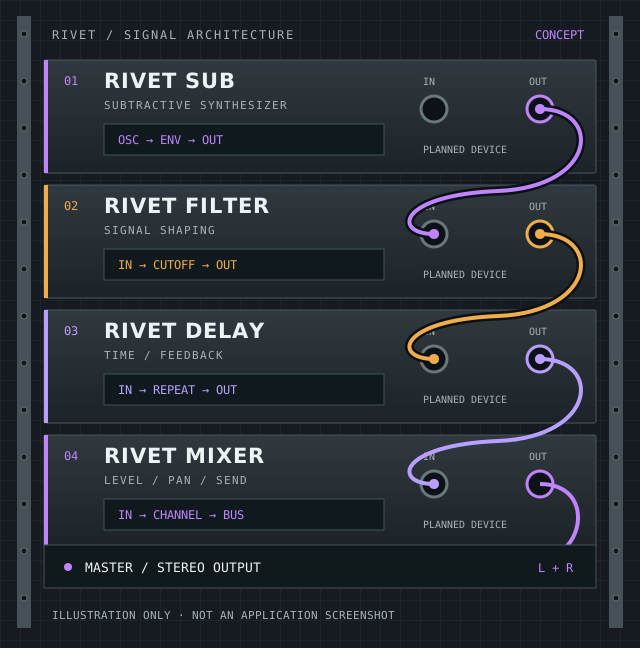
01 / The idea
The planned workflow puts the relationship between your instruments, effects and arrangement in plain view.
Choose a device. Shape a sound. Keep your instruments and effects together in one modular workspace.
Flip to the rear view and connect typed audio and modulation ports. Every cable is intended to change the processing graph.
Arrange MIDI, edit notes, automate parameters and render your mix. These are later milestones on the roadmap.
02 / Development, in the open
RIVET is under active development. The current 0.1.0 baseline proves the audio and MIDI foundation.
Read the 0.1.0 changes ↗03 / Made for the Linux desktop
C++20 for the engine. Qt 6 for the interface. A carefully defined boundary between real-time audio and everything else.